Mise Maximum Roulette Casino Monaco
- Mise Maximum Roulette Casino Monaco Slot Machine
- Mise Maximum Roulette Casino Monaco No Deposit
- Mise Maximum Roulette Casino Monaco Slots
The profits for last season of the Casino at Monte Carlo amounted to 65,860,170 francs (approximately $4,345,971), an increase of 4,000,000 francs ($264,000) over last year. Thus—despite the. Roulette: minimum bet $2.50. Predict on which number the ball will come to rest after being spun in the roulette wheel. The Casino de Mont-Tremblant has all you need for a great time.
| Casino de Monte-Carlo | |
|---|---|
Casino de Monte-Carlo in the Principality of Monaco | |
| Location | Monte Carlo, Monaco |
| Opening date | 1863; 157 years ago |
| Signature attractions | Opéra de Monte-Carlo |
| Casino type | Land-Based |
| Coordinates | 43°44′22″N7°25′44″E / 43.73944°N 7.42889°ECoordinates: 43°44′22″N7°25′44″E / 43.73944°N 7.42889°E |
| Website | www.montecarlosbm.com/en/casino-monaco/casino-monte-carlo |
The Monte Carlo Casino, officially named Casino de Monte-Carlo, is a gambling and entertainment complex located in Monaco. It includes a casino, the Opéra de Monte-Carlo, and the office of Les Ballets de Monte-Carlo.[1]
The Casino de Monte-Carlo is owned and operated by the Société des bains de mer de Monaco, a public company in which the Monaco government and the ruling royal family have a majority interest. The company also owns the principal hotels, sports clubs, foodservice establishments, and nightclubs throughout the Principality.
The citizens of Monaco are forbidden to enter the gaming rooms of the casino.[2]
History[edit]
The idea of opening a gamblingcasino in Monaco belongs to Princess Caroline,[3] a shrewd, business-minded spouse of Prince Florestan. Revenues from the proposed venture were supposed to save the House of Grimaldi from bankruptcy. The ruling family's persistent financial problems became especially acute after the loss of tax revenue from two breakaway towns, Menton and Roquebrune, which declared independence from Monaco in 1848 and refused to pay taxes on olive oil and fruit imposed by the Grimaldis.
In 1854, Charles, Florestan's son and future Prince of Monaco, recruited a team of Frenchmen—writer Albert Aubert and businessman Napoleon Langlois—to devise a development plan and write a prospectus to attract 4 million francs needed to build a spa for the treatment of various diseases, a gambling casino modeled from the Bad Homburg casino, and English-styled villas. Granted the concession of 30 years to operate a bathing establishment and gaming tables, Aubert and Langlois opened the first casino at 14 December 1856 in Villa Bellevu. Intended to be only a temporary location, the building was a modest mansion in La Condamine.
In the late 1850s, Monaco was an unlikely place for a resort to succeed. The lack of roads needed to connect Monaco to Nice and the rest of Europe, and the absence of comfortable accommodations for visitors, as well as the concessionaires' failure to publicize the new resort, resulted in far fewer customers than was originally anticipated. Unable to raise the capital needed to operate the money-losing enterprise, Aubert and Langlois ceded their rights to Frossard de Lilbonne, who in turn passed it to Pierre Auguste Daval in 1857.[4]

During this initial period, the casino had been moved several times, until it finally ended up in the area called Les Spelugues (English: The Caves). Construction at this site began on 13 May 1858 to designs of the Parisian architect Gobineau de la Bretonnerie[5] and was completed in 1863. Gobineau de la Bretonnerie also designed the neighboring Hôtel de Paris Monte-Carlo (constructed in 1862).[6]
Although the casino began to make a profit in 1859, Daval was not up to the task. Just like his predecessors, he was incompetent and lacked the ability to bring the gambling enterprise to the scale envisioned by Princess Caroline.[7] Frustrated, she dispatched her private secretary M. Eyneaud to Germany, hoping to recruit François Blanc, a French entrepreneur and operator of the Bad Homburg casino. Blanc declined the offer. It took a lot of time and persuasion on the part of Princess Caroline to convince the Blancs to move to Monaco. Princess Caroline even appealed to Madame Blanc, whom she befriended during her first visit to Bad Homburg, with a suggestion that Monaco's mild climate would be good for Madame Blanc's ill health.
Finally, in 1863 François Blanc agreed to take over Monaco's casino business. To manage the new venture, a company—the Societe des Bains de Mer et du Cercle des Etrangers—was formed with capital of 15 million francs. Among the prominent investors were Charles-Bonaventure-François Theuret, Bishop of Monaco, and Cardinal Pecci, the future Pope Leo XIII. Blanc became the single majority stockholder in the company and received a 50-year concession, which would last until 1913. Blanc used his connections to quickly raise the required capital, and began the massive construction. On Blanc's insistence, the Spelugues area where the gambling complex was located was renamed to make it sound more attractive to casino visitors. A few suggestions were considered, and the name Monte Carlo was chosen in Prince Charles' honor.
In 1878–79, the casino building was transformed and expanded to designs of Jules Dutrou (1819–1885) and Charles Garnier, the architect who had designed the Paris opera house now known as the Palais Garnier. François Blanc knew Garnier because Blanc had provided a loan of at least 4.9 million gold francs to the cash-strapped government of the French Third Republic, so that the opera house, which had been started in 1861, could be completed. It had finally opened in 1875. The alterations to the Casino de Monte Carlo included the addition of a concert hall (designed by Garnier and later named the Salle Garnier), located on the side of the casino facing the sea, and the redesign and expansion of the gaming rooms and public spaces, mostly carried out by Dutrou on the side of the casino facing the Place du Casino, where the Hôtel de Paris Monte-Carlo and the were also located.[8]
In 1880–81, the casino was expanded again, to the east of Dutrou's Moorish Room, by the addition of the Trente-et-Quarante Gaming Room, also designed by Garnier. Subsequent additions and expansions, and the remodeling of the Trente-et-Quarante Gaming Room into the Salle des Américains, have mostly obliterated Garnier's contributions to this part of the casino, except for some ceiling decorations.[9] In 1898–99, the Salle Garnier was remodeled by architect Henri Schmit, primarily in the stage area, so that it would be more suitable for opera and ballet performances. However, much of Garnier's original facade and the interior design of the auditorium itself remain intact.[8] Despite all of the later additions and modifications, the casino still has a distinctly Beaux Arts style.
In 1921, the first Women’s Olympiad was held at the casino gardens.
Until recently, the Casino de Monte-Carlo has been the primary source of income for the House of Grimaldi and the Monaco economy.
Casino facilities[edit]
The casino has facilities to play a variety of games which include:
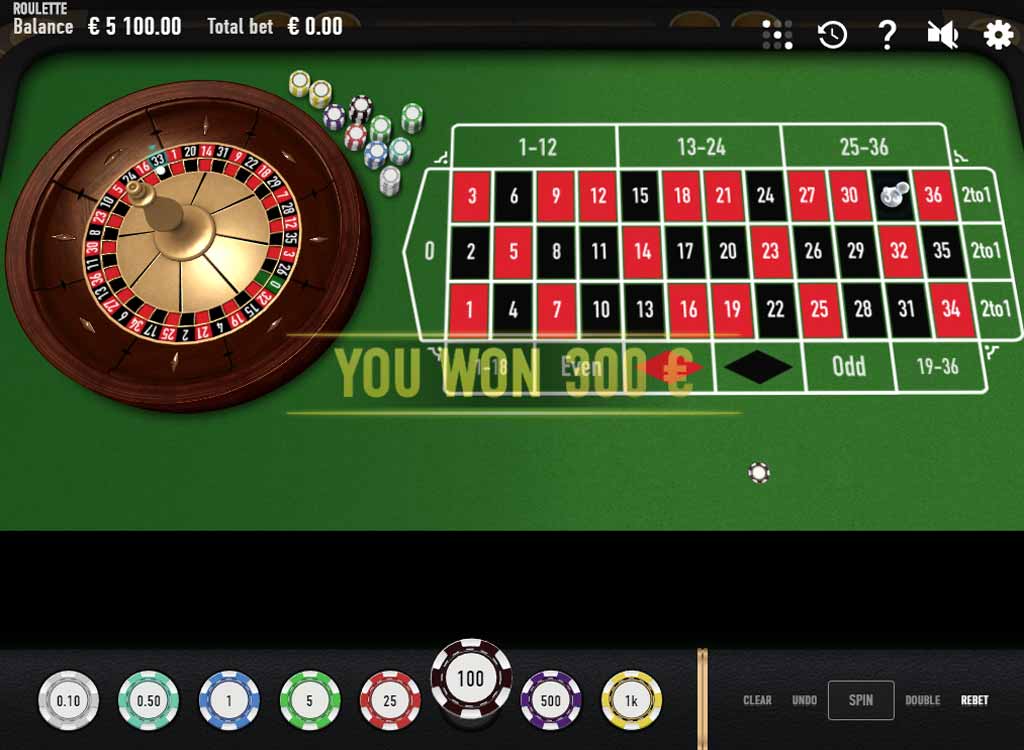
- Different kinds of roulette
1913 Gambler's fallacy[edit]
The most famous example of the gambler's fallacy occurred in a game of roulette at the Casino de Monte-Carlo in the summer of 1913, when the ball fell in black 26 times in a row. This was an extremely uncommon occurrence, although no more nor less common than any of the other 67,108,863 sequences of 26 red or black. Gamblers lost millions of francs betting against black, reasoning incorrectly that the streak was causing an 'imbalance' in the randomness of the wheel, and that it had to be followed by a long streak of red.[10]
Breaking the bank[edit]
- In 1873, Joseph Jagger gained the casino great publicity by 'breaking the bank at Monte Carlo' by discovering and capitalizing on a bias in one of the casino's roulette wheels. Technically, the bank in this sense was the money kept on the table by the croupier. According to an article in The Times in the late 19th century, it was thus possible to 'break the bank' several times. The 1892 song 'The Man Who Broke the Bank at Monte Carlo', made famous by Charles Coborn, was probably inspired by the exploits of Charles Wells, who 'broke the bank' on many occasions on the first two of his three trips.
- According to the book Busting Vegas by Ben Mezrich, a team of blackjack players recruited from the Massachusetts Institute of Technology by team-leader Victor Cassius and Semyon Dukach attempted to break the bank at Monte Carlo with the assistance of a team-play-based system. The book describes how the management of Monte Carlo responded to the success of the team. According to Semyon the account in Busting Vegas is accurate aside from the fact that the team was made up of himself, Andy Bloch and another player he refers to as 'Katie'.[11]
In popular culture[edit]
- James Bond, a fictional British spy, is often associated with the Casino de Monte-Carlo.
- Monaco and its casino were the locations for a number of James Bond movies, including Never Say Never Again and GoldenEye, as well as for the 'Casino Royale' episode of the CBS's Climax!television show.
- The casino served as a filming location for the 2004 film Ocean's Twelve.[12]
- The casino makes an appearance in Condorman, The Castle of Cagliostro and Madagascar 3: Europe's Most Wanted.
Other mentions[edit]
- The Monte Carlo method, a computational approach which relies on repeated random sampling to solve difficult numerical problems, was named after the Casino de Monte-Carlo by physicist Nicholas Metropolis.[13]
Gallery[edit]
The Casino de Monte-Carlo main entrance
View of the casino illuminated at dusk
The main hall
Roulette tables
The gardens behind the casino with the Salle Garnier in the background
South balcony
See also[edit]
References[edit]
Notes
- ^'Le Casino de Monte-Carlo joue la carte de l'ouverture'. nicematin.com. Archived from the original on 2012-08-05.
- ^The rule banning all Monegasques from gambling or working at the casino was an initiative of Princess Caroline, de facto regent of Monaco, who amended the rules on moral grounds. The idea that the casino was intended only for the foreigners was even emphasized in the name of the company that was formed to operate the gambling business, Societe des Bains de Mer et du Cercle des Etrangers (English: Company of Sea Bathing and of the Circles from Abroad). Source: Edwards, Anne (1992). The Grimaldis of Monaco: The Centuries of Scandal—The Years of Grace. William Morrow. ISBN978-0-688-08837-8..
- ^Edwards, Anne (1992). The Grimaldis of Monaco: The Centuries of Scandal - The Years of Grace. William Morrow. ISBN978-0-688-08837-8..
- ^'Chronology of Gambling (1852-1900)'. gamblinghistory.info.
- ^Folli & Merello 2004, pp. 112, 114.
- ^Denby p. 92.
- ^Sharma, K.K. (1999). Tourism and Culture. New Delhi: Sarup & Sons. ISBN81-7625-056-2.
- ^ abFolli & Merello 2004, pp. 116–117, 136; Bouvier 2004, pp. 190–192.
- ^Folli & Merello 2004, pp. 132–133.
- ^Lehrer, Jonah (2009). How We Decide. New York: Houghton Mifflin Harcourt. p. 66.
- ^'ThePOGG Interviews - Semyon Dukach - MIT Card Counting Team Captain'. Retrieved 10 November 2012.
- ^'OCEANS 12 - Production notes - About the production'. CinemaReview.com. Retrieved December 1, 2013.
- ^Metropolis 1987.
Sources
- Bonillo, Jean-Lucien, et al. (2004). Charles Garnier and Gustave Eiffel on the French and Italian Rivieras: The Dream of Reason (in English and French). Marseilles: Editions Imbernon. ISBN9782951639614.
- Bouvier, Béatrice (2004). 'Inventaires' in Bonillo et al. 2004, pp. 186–205.
- Folli, Andrea; Merello, Gisella (2004). 'The Splendour of the Garnier Rooms at the Monte Carlo Casino' in Bonillo et al. 2004, pp. 112–137.
- Denby, Elaine (2004). Grand Hotels: Reality and Illusion. London: Reaktion Books. ISBN9781861891211.
- Metropolis, N. (1987). 'The beginning of the Monte Carlo method'(PDF). Los Alamos Science (1987 Special Issue dedicated to Stanislaw Ulam): 125–130.
External links[edit]
| Wikimedia Commons has media related to Casino de Monte Carlo. |
This exclusive gaming establishment is the spiritual home of roulette. If one casino embodies the game- it’s this one. It´s even helped to develop famous mathmatical statistical theories through its roulette tables. The Karl Pearson roulette saga and his Chi-Square Test for Goodness of Fit are a case in point. We kid you not!
The Casino de Monte-Carlo is unique in more ways than one- with it’s spectacular setting, history and the prestige of the building itself (it is one of several glamour casinos on the Continent, the other being Casino Baden Baden), it is unique for the incredible diversity of its table games, especially roulette. You´ll likely to be bumping into the same punters that you might meet at Les Ambassadeurs or the Ritz in London, especially on the private tables.
If you are a fan of roulette, this is a place that you’ll need to visit at some point! Once you have been here, you´ll find casinos in Las Vegas like the Venetian a little on the tacky side!

Tables include European Roulette and English Roulette.
The game starts when the croupier announces “Faites vos jeux” (“Place your bets”). You then place your bets.
On the European roulette tables, you can then call out bets (see out section on Call Bets). On the English Roulette tables, the only call bets you can request are Thirds (Tiers), Orphans (Orphelins) and Neighbors of Zero (Voisins du Zero). You must place your chips on the green baize of the betting area.
The croupier will spins the ball in the opposite direction of the spinning wheel, and will call out “Rien ne va plus” (“No more bets”) when the ball is about to come to a rest. You must stop laying down bets (any bet beyond this point is invalid and is known as Past Posting.
The everyone holds their breath, crosses their fingers and stares at the wheel as the ball slowly comes to a rest. The croupier will then announce the winning number. Losing bets are raked in and winning bets are paid out.
History of the Casino de Monte-Carlo
The history of the Principality of Monaco is intertwined with that of the Monte Carlo Casino. The casino is owned and run by the Société des bains de mer de Monaco, a public company which counts the Monaco government and the ruling family as major shareholders. It has been popular with Casino Whales for decades.
Mise Maximum Roulette Casino Monaco Slot Machine
It was Princess Caroline, wife of Prince Florestan who first came up with the idea of building a casino in the Principality to help finance the House of Grimaldi.

In 1854, Florestan’s son Charles, and next in line to become Prince of Monaco, hired a French team to build a spa, a casino and luxury villas. Aubert and Langlois opened the first casino in 1856 once they had been granted a concession by the ruling family.
Although it struggled at first, due to poor communications with France, by the end of the 19th Century it was thriving and remains an important source of income today for Monaco and the Grimaldis.
Mise Maximum Roulette Casino Monaco No Deposit
The casino is the source of many legends and fables, particularly where its roulette tables are concerned. In 1873, Joseph Jagger took the casino to the cleaners when he spotted a bias in one of the casino’s roulette wheels. Charles Wells was another high roller gambler who “broke the bank” of Monaco. More recently, 3 men from the UK became famous for their Monte Carlo Casino scam when they managed to steal €3.7 million by swapping chips bought outside that were worth €10 for €1000 casino chips.
Mise Maximum Roulette Casino Monaco Slots
Gambler’s Fallacy
The Casino de Monte-Carlo is also famous for cleaning up on a very long streak of blacks on 18 August 1913. The players at the time were betting that the streak had to end, with the false notion that independent chance events must even out (the gambler’s fallacy). That day the ball fell into black numbers 26 times in a row, and as the streak went on gamblers lost millions betting on the opposite colour, thinking that their odds were better with the length of the run.